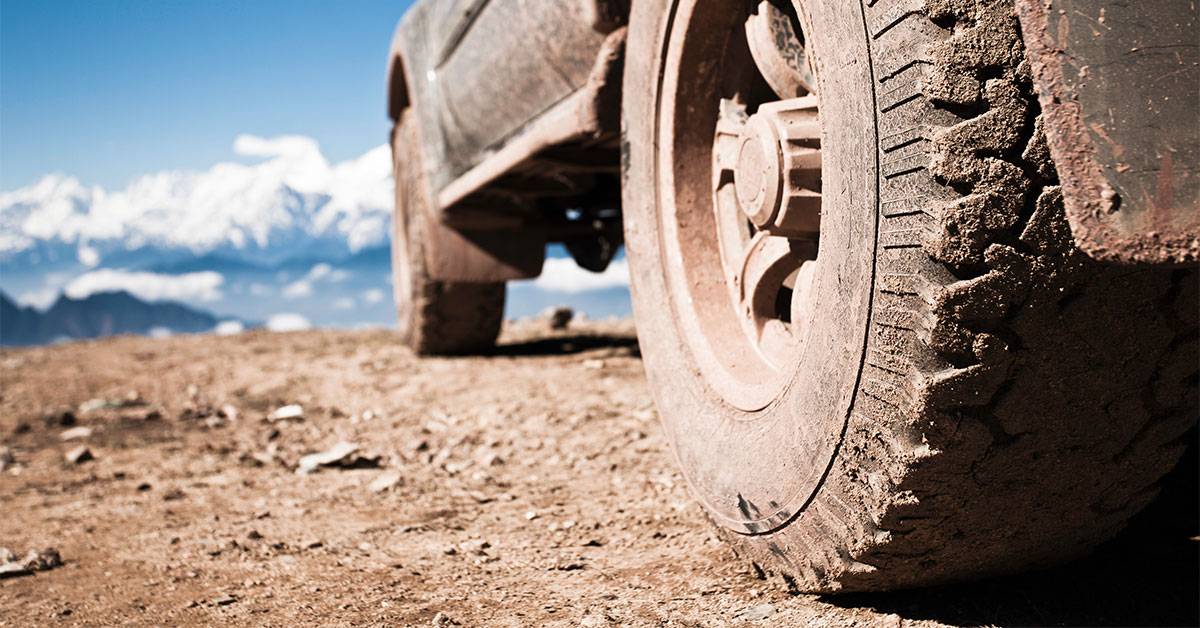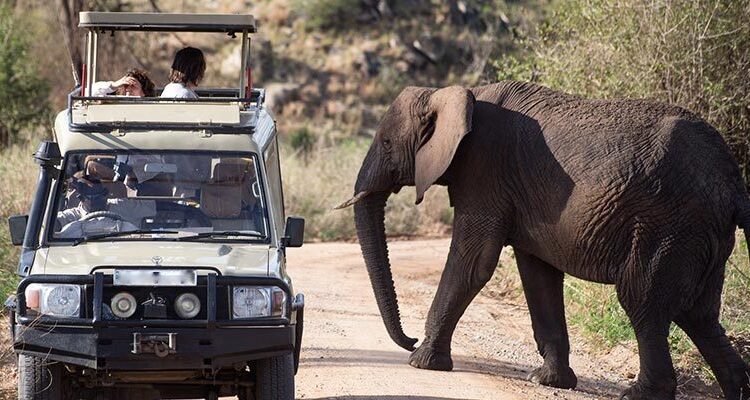
Uganda is a country best explored off the beaten path — and much of that path isn’t paved. From rural roads leading to remote lodges to the rugged tracks inside national parks, a 4×4 is often the difference between a smooth trip and a stuck one. This guide walks through everything you need to know to choose the right off-road vehicle for your trip, whether you’re headed on safari, into rural areas, or simply want a capable vehicle for Uganda’s unpredictable roads.
Why Uganda’s Roads Demand a 4×4
Uganda’s road network varies enormously depending on where you’re headed. Major highways connecting Kampala to larger towns are generally paved and well maintained. But once you move beyond the main routes — toward national parks, rural districts, or smaller towns — road quality drops quickly. Dirt tracks, potholes, and unbridged river crossings are common, and conditions can shift dramatically with the weather.
Uganda’s rainy seasons (roughly March–May and September–November) make this even more pronounced. Roads that are firm and passable in a standard car during the dry season can become muddy, rutted, and genuinely difficult without four-wheel drive and higher ground clearance. For anyone planning to travel beyond city limits, a 4×4 isn’t about comfort — it’s about making sure you actually reach your destination on schedule.
Where You’ll Need 4WD Most
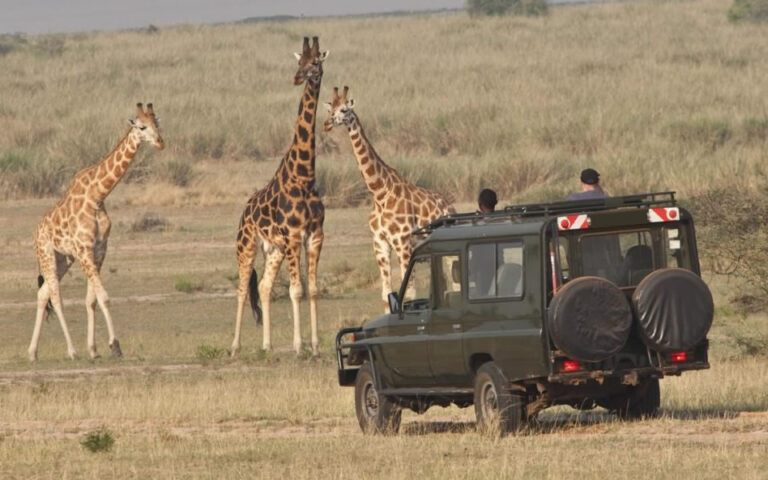
National parks. Nearly every major park — Murchison Falls, Queen Elizabeth, Kidepo Valley, Bwindi, Kibale — has sections of unpaved, uneven road where a 4×4 significantly improves both safety and comfort.
Rural and off-highway routes. Traveling to smaller towns, rural lodges, or off-the-main-route destinations often means leaving paved roads behind entirely.
Rainy season travel. Even routes that are fine in a standard car during dry months can require 4WD once the rains set in, particularly on clay or murram (gravel) surfaces that turn slick and soft.
River and stream crossings. Some rural and park routes include shallow crossings that a low-clearance vehicle simply can’t handle safely.
If your trip includes any of these, a 4×4 moves from “nice to have” to essential.
Comparing Popular 4×4 Models
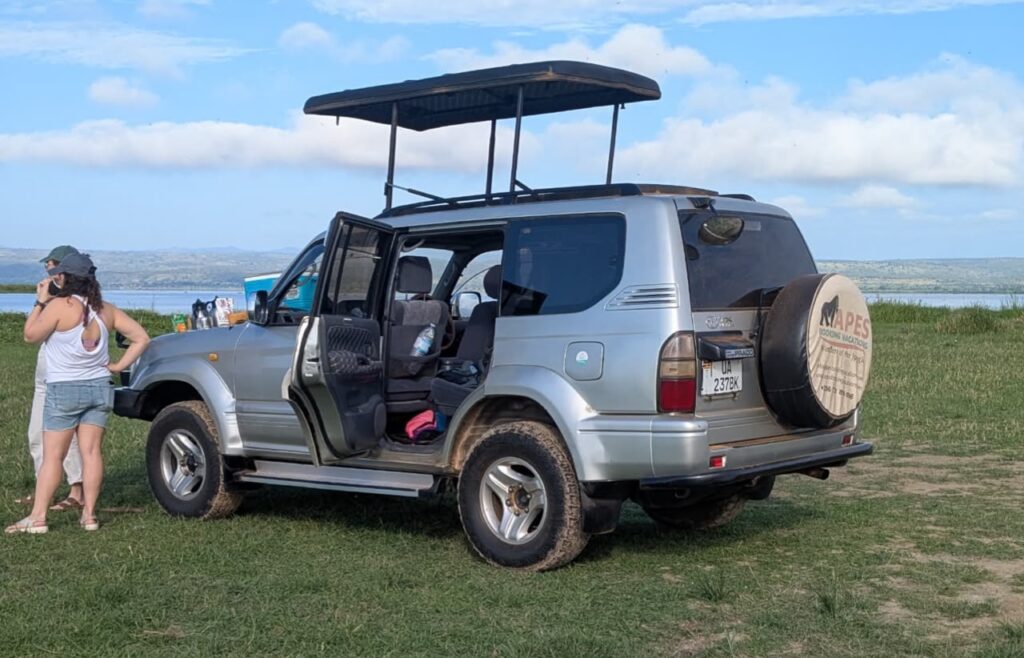
Toyota Land Cruiser. The most trusted 4×4 for serious off-road and long-distance travel in East Africa. Exceptional ground clearance, strong torque, and a reputation for reliability even on Uganda’s toughest routes. Best for remote parks, multi-day safaris, and travelers who want minimal breakdown risk.
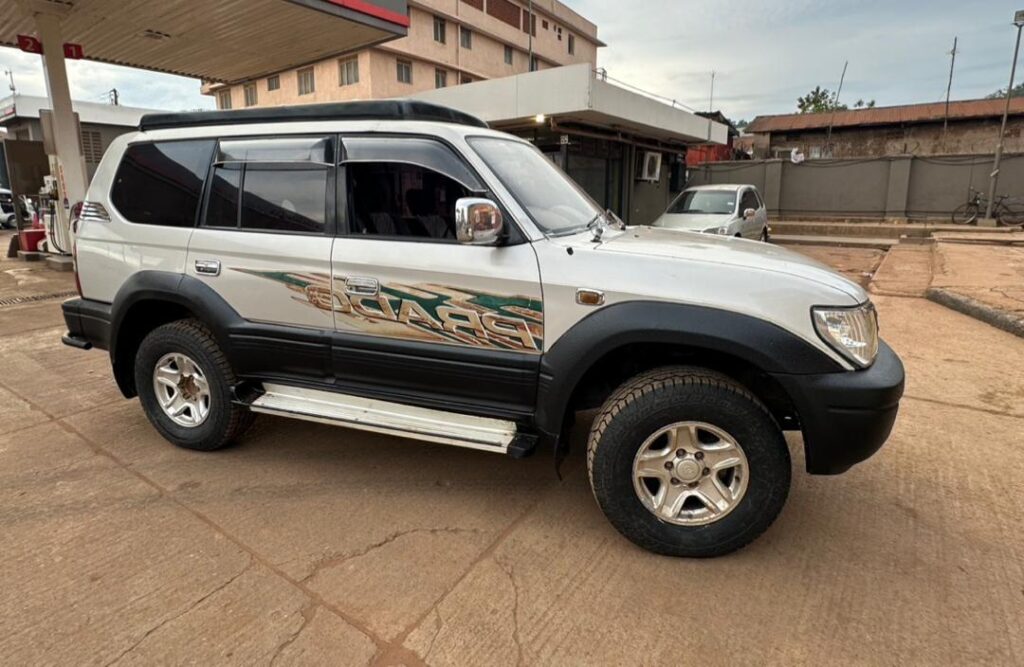
Mitsubishi Pajero. A well-balanced mid-size 4×4 that handles rough terrain confidently while remaining comfortable for longer road stretches between stops. A strong middle-ground choice for travelers who need real off-road capability without the size and cost of a Land Cruiser.
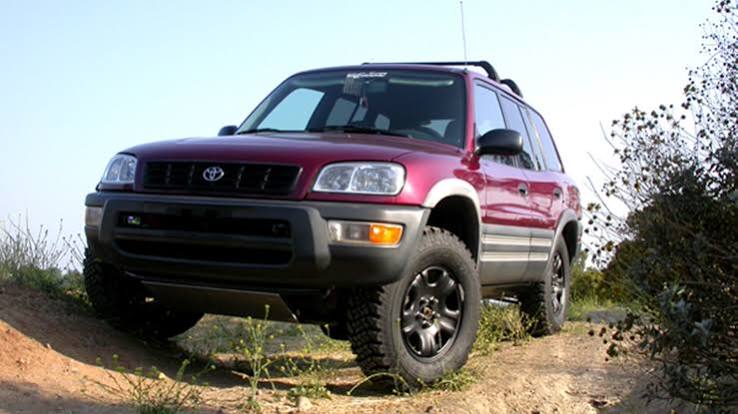
Toyota RAV4. A compact SUV offering light off-road capability with better fuel efficiency than larger 4x4s. Suited to routes with moderate terrain — good, well-graded park roads or rural routes that aren’t severely rutted — and to travelers prioritizing cost savings over maximum ruggedness.
Choosing between these often comes down to matching the vehicle’s capability to your actual route, rather than defaulting to the largest or most expensive option.
Manual vs. Automatic 4×4: Which to Choose
Both transmission types are available for 4×4 hire in Uganda, and the right choice depends on driving comfort and experience.
Manual transmission gives drivers more direct control over power delivery, which some experienced off-road drivers prefer on steep inclines or slippery surfaces where precise throttle control matters. It’s also often slightly more fuel-efficient.
Automatic transmission is generally easier and less tiring to drive, especially on long trips or in stop-and-start traffic around Kampala before you reach open road. For travelers less experienced with manual driving — or simply looking for a more relaxed drive — automatic is usually the more comfortable choice.
Neither option is inherently “better” for off-road performance in a modern 4×4; it largely comes down to what you’re used to driving and how much of your trip involves technical terrain versus longer, easier stretches.
Fuel Efficiency and Cost Considerations for Long Trips
4×4 vehicles generally consume more fuel than sedans, due to their larger engines and heavier weight — a factor worth planning around on longer itineraries. A few things affect your actual fuel costs:
Vehicle size. A Land Cruiser will typically use more fuel than a Pajero, which in turn uses more than a RAV4. If your route allows for a smaller 4×4, this can meaningfully reduce your fuel spend over a multi-day trip.
Distance and terrain. Rougher terrain and low-range 4WD driving increase fuel consumption compared to highway driving. Factor this in when budgeting for parks like Kidepo, which involve long approach distances.
Fuel policy. Confirm with your rental company whether fuel is included in your quote or whether you’re responsible for topping up before return — this affects your total cost far more than the daily rental rate alone.
Balancing vehicle capability against fuel cost is part of choosing the right 4×4 for your specific trip, not just the most powerful one available.
Renting With or Without a Driver
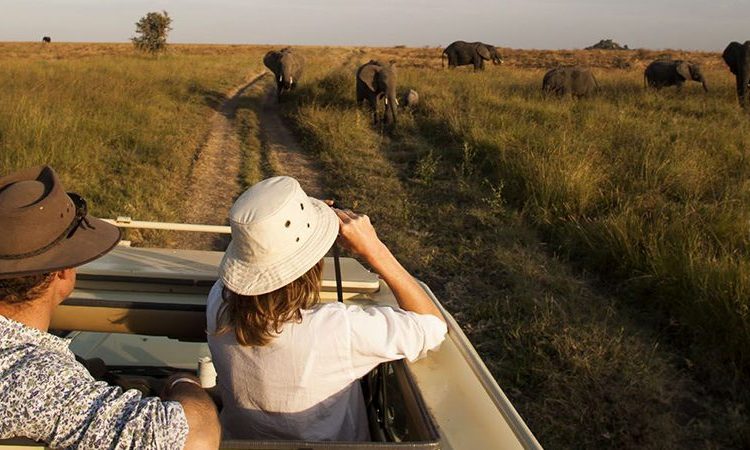
Self-drive 4×4 hire gives you full independence — control over your schedule, stops, and pacing — and is generally the more affordable option since you’re not covering a driver’s daily rate. It suits travelers comfortable with left-side driving and manual navigation over unfamiliar terrain.
Renting with a driver adds meaningful value for travelers less experienced with off-road conditions or unfamiliar with Uganda’s roads. A driver familiar with the route can navigate difficult terrain, avoid known problem areas, and handle situations like river crossings or muddy sections with far less risk than a first-time visitor attempting it solo. For remote destinations or rainy-season travel, this local experience often justifies the added cost.
What to Check Before Driving Off-Road
Before setting off, a quick inspection can prevent serious problems later:
- Spare tire and jack. Confirm both are present and in good condition — punctures are common on rough tracks.
- Ground clearance. Check that the vehicle’s clearance genuinely matches your planned route, especially if you’re headed somewhere remote.
- Recovery basics. A tow rope or basic recovery gear is worth having for muddy or soft-ground situations.
- Fuel range. Confirm the tank is full and understand how far you can travel before the next fuel stop, particularly on rural routes.
- Communication. Check mobile signal expectations for your route and consider offline maps for areas with limited coverage.
- Vehicle documentation. Carry the rental agreement and any required permits, especially for national park entry.
Running through this checklist before departure reduces the chance of an off-road trip turning into an off-road problem.
How to Book the Right 4×4 With Pearl Drive Car Rental
Pearl Drive Car Rental offers a range of 4×4 options — including the Land Cruiser, Mitsubishi Pajero, and Toyota RAV4 — suited to everything from national park safaris to rural travel across Uganda. Every vehicle is maintained specifically for the demands of off-road driving, with transparent pricing and the option of self-drive or a driver-guide, depending on your comfort level and itinerary.
Whether your trip involves a single rural stretch or a full multi-park safari route, choosing the right 4×4 for the terrain ahead makes all the difference. Get in touch at book@pearldrivecarrental.com or +256750145548 to discuss your route and find the right vehicle for the job.
About the Author